"We booked bowling — it was a great evening." You hear that line at companies year after year. And yet none of the participants can recall, three months later, what that bowling night actually achieved. It was enjoyable. But was it team building?
What is a Scavenger Hunt?
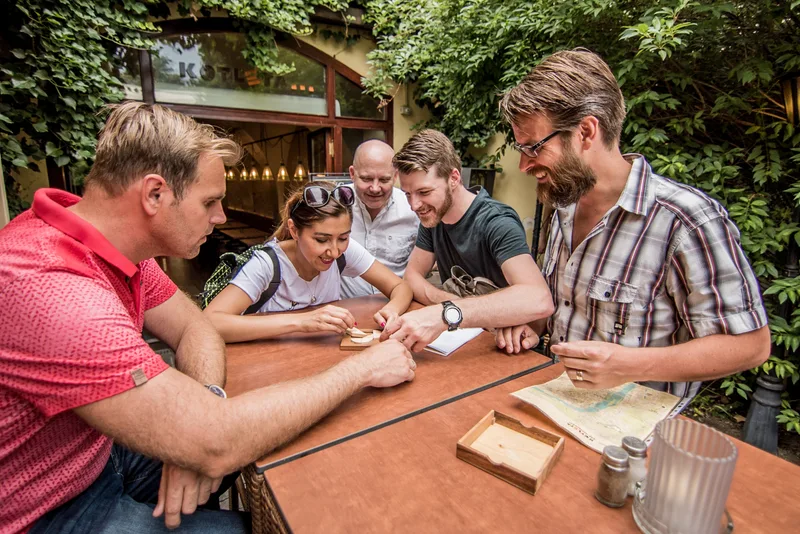
A Scavenger Hunt (also known as a Treasure Hunt) is a group activity in which teams complete challenges, solve riddles, and navigate through space — and without effective communication, they simply won't win. Unlike individual competitions, it's a purely team-based format: without sharing information and dividing responsibilities, a team's chances of winning drop dramatically.
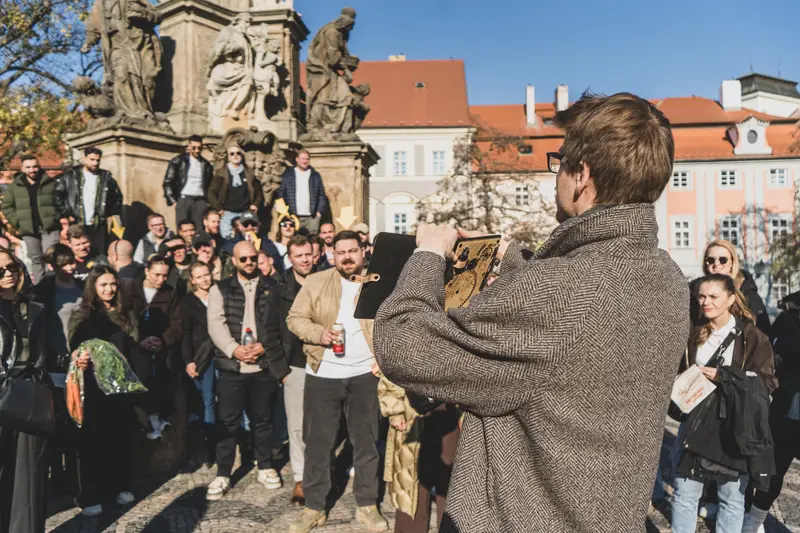
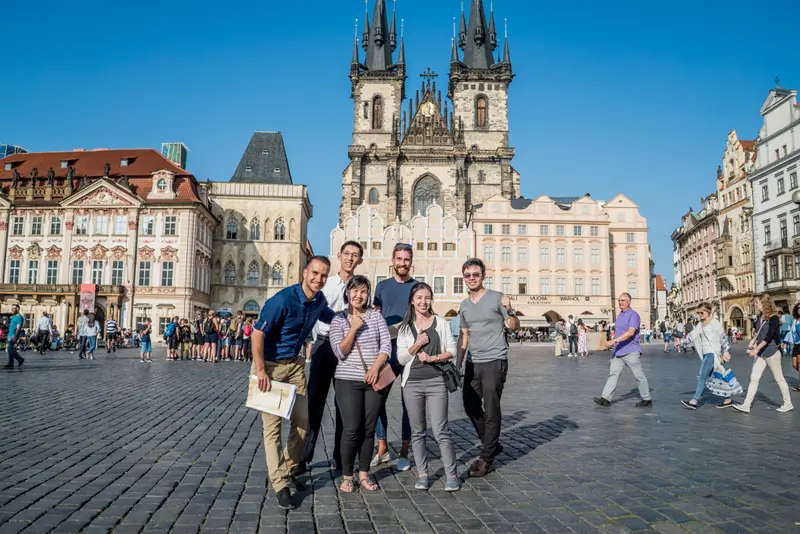
In our Prague version, teams explore the historic city centre, completing tasks at designated locations while competing for the best score. An experienced Game Master oversees the entire event, ensures fair play, and keeps the energy of the whole group high.
What psychology says about team building
The strongest team bonds don't form through passive entertainment — they form when people overcome a challenge together. This conclusion is well supported by organisational psychology research and workplace practice. It's known as the shared-effort effect: an experience in which a team faces a common problem and solves it together creates a significantly stronger sense of belonging than an activity where everyone plays their own game and results are individual.
Another key factor is what researchers call the natural interaction environment. In office settings, people are constrained by hierarchy and formal roles. In an informal outdoor environment — especially one that's new to everyone — those barriers naturally break down.
Why bowling falls short
Bowling falls short as team building because its structure doesn't require group communication or shared decision-making — everyone plays their own game and results are purely individual. Bowling is a great game, but as team building it has a structural problem: players stand or sit in a line, take turns, and each person's score is entirely their own. Interaction happens at best during a congratulation after a good shot. Group dynamics and shared decision-making are minimal.
Office parties and barbecues have similar drawbacks — they're pleasant, but people naturally cluster into existing friend groups, leaving newer or more introverted colleagues on the margins. No activity pushes them out of their comfort zone.
5 reasons Scavenger Hunt works better
Scavenger Hunt works better as team building because its structure actively forces collaboration — unlike bowling or a party, where communication only happens by chance.
| Criterion | Bowling | Office Party | Scavenger Hunt |
|---|---|---|---|
| Active collaboration across the whole team | ✗ | ✗ | ✓ |
| Communication required by the structure | ✗ | partially | ✓ |
| Everyone finds a role | ✗ | partially | ✓ |
| Breaks down hierarchical barriers | ✗ | ✗ | ✓ |
| Memorable experience | moderate | moderate | high |
| Skills transferable to the workplace | ✗ | ✗ | ✓ |
- It demands real collaboration. Without communication and sharing information, the team won't complete the tasks within the time limit. Every member must contribute.
- Everyone finds their role. Navigators lead the route, creatives crack the riddles, and the more physically active handle movement challenges. All roles are equally essential.
- The environment levels the playing field. In the streets of Prague, there's no "boss" and "subordinate" — there's just a team trying to complete a mission.
- The challenge is shared. When the team conquers a difficult task, everyone feels it together. That moment is the foundation of lasting team cohesion.
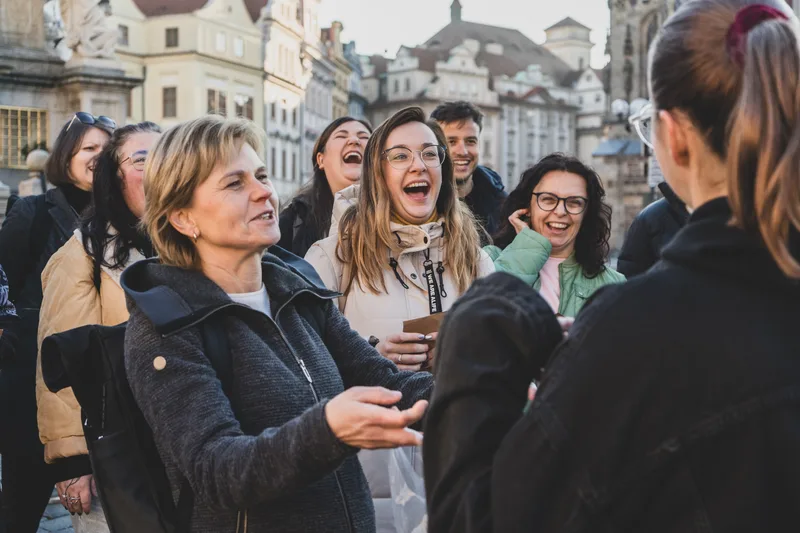
- The experience is memorable. Prague's stunning backdrop ensures colleagues will still be talking about this event a year later — and telling newcomers all about it.
What it looks like in practice
Treasure Hunt Prague runs for 2.5–3 hours with no breaks — from the briefing through the challenges to the final results ceremony.
A typical Treasure Hunt Prague starts with a briefing at a chosen meeting point — the Game Master explains the rules, splits participants into teams, and starts the clock. Teams then follow the route, completing tasks at checkpoints and accumulating points. At the end, everyone gathers at the final location where the Game Master announces the results and presents prizes to the winning teams.
The whole event runs for 2.5–3 hours without interruption. No waiting in line, no dead time in the schedule. The energy stays high throughout.
Want to know more about how it all works? See a detailed walkthrough of the event, or read our guide on how to pick the right activity for your team.