Client Profile and Brief
An international school in Prague was looking for team building for secondary-age students — a playful activity built on cooperation that would work even for students who don't normally interact outside class.
The enquiry came from Kristýna Zíková, Trips and After-School Clubs Coordinator at Park Lane International School, with campuses in Prague 6. The school was looking for an activity for students in Years 7–11 (ages 12–16) — ideally in English, running between 9:00 and 15:00 including lunch. The brief was clear: this shouldn't just be a fun afternoon, it needed to be genuine team building — a format that forces students to cooperate, not just have fun side by side.
Based on our experience, we recommended a classic Treasure Hunt through Prague's historic centre, and advised on which age group it would suit best. Moving independently in small teams through Prague's streets works best for older students (15–16) — younger years could get lost more easily or would need closer supervision from the outset.
The Programme Grows: From One Year Group to Two
What started as a request for one year group quickly grew into two — and with it, the logistics of the whole day.
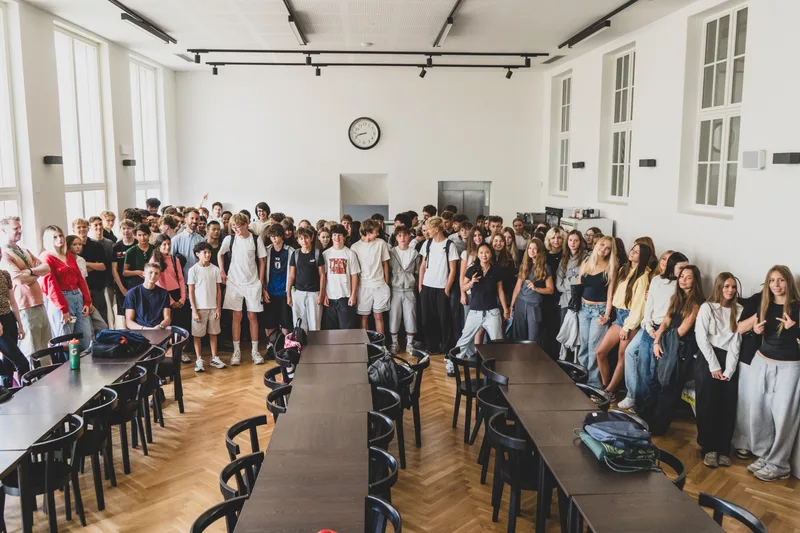
The school eventually decided to offer the activity to both Year 10 and Year 11 at once, meaning up to 120 students. We reassured the client that group size wasn't an issue — we'd run similar events for hundreds of players at once. The second challenge was filling an entire school day, not just a two-hour game: the school needed a programme from 9:00 to 14:30–15:00, ideally with lunch in the middle.
We proposed a combination that made sense for both sides: a morning Treasure Hunt (2.5–3 hours), a shared lunch, and an afternoon creative session where students used photos and videos collected during the hunt as bonus tasks to put together a short advert for Scavenger Hunt Prague. This add-on flowed naturally from the morning game and gave the afternoon a clear goal, even after the physical part of the day.
The Twist a Week Before the Event: No Unsupervised Movement Around Prague
Three months of planning, an approved programme, all the details ironed out — and a week before the event came a phone call that could have stopped the whole collaboration.
Less than a week before the agreed date, the school was dealing with an unrelated incident: a group of students in the same age category had deliberately broken away from supervision during a different school trip. School management responded with a blanket ban — from that point on, students were not allowed to move around Prague under any circumstances without direct adult supervision. That was exactly the assumption a classic Treasure Hunt (small teams moving independently through the streets) relied on.
The organiser contacted us with a brief but clear question: could the game be adapted to fit within the new rule at all, or would the event have to be cancelled?
The Fix: Smaller Groups with Double Supervision
Instead of cancelling the event, within a few days we agreed an adapted model with the client — fewer students per group and supervision for each one, for the whole duration of the game.
Together we recalculated the logistics: 120 students split into 12 groups of 10, each accompanied by one adult. Scavenger Hunt Prague provided six experienced guides, and the school supplied the remaining six chaperones from among its teachers. The route and the tasks stayed exactly the same — the only thing that changed was the level of supervision: instead of spot-checks from a Game Master, every group now had an adult with them for the entire game.
This adjustment let us preserve the actual substance of the experience — solving tasks independently, navigating the city, working as a team — while meeting the school's new safety rules to the letter. For the client, it was the difference between a cancelled event and one students could still look forward to.
The Day, Step by Step
A morning game through central Prague, lunch back at school and an afternoon creative session — three phases that together filled the whole school day.
Gathering and Briefing: The Úvoz Campus
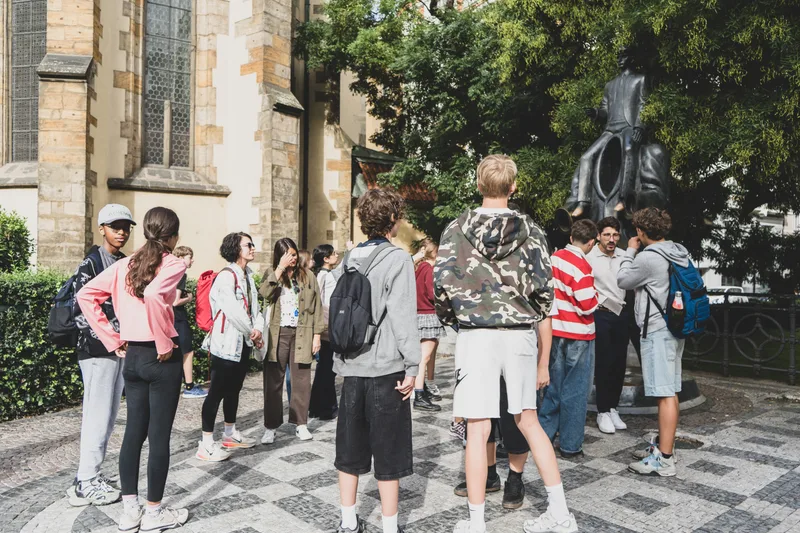
Students from both year groups gathered at 8:30 at the school's Úvoz campus, just below Prague Castle. The school was unusually empty that day — the older students were away on a multi-day expedition, so the campus garden and premises were available for this event alone. After a short briefing in English, students split into 12 groups of 10 and set off with their chaperones towards the Old Town.
The Hunt Through the Old Town
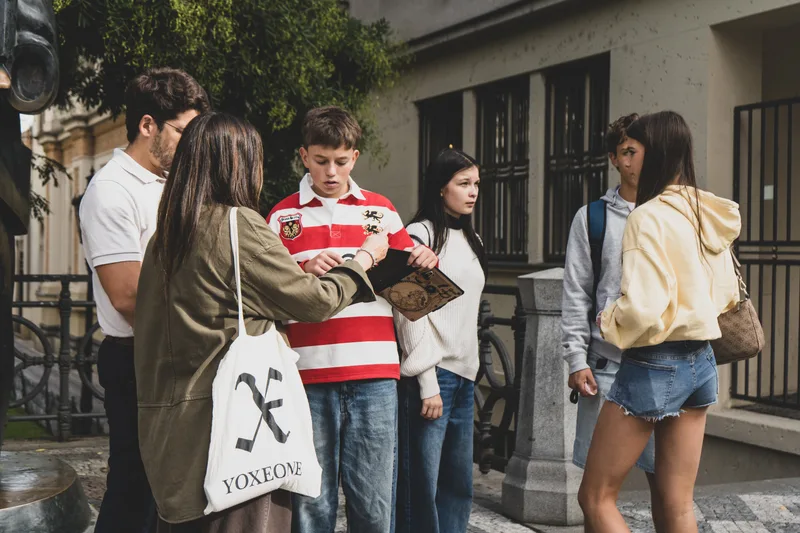
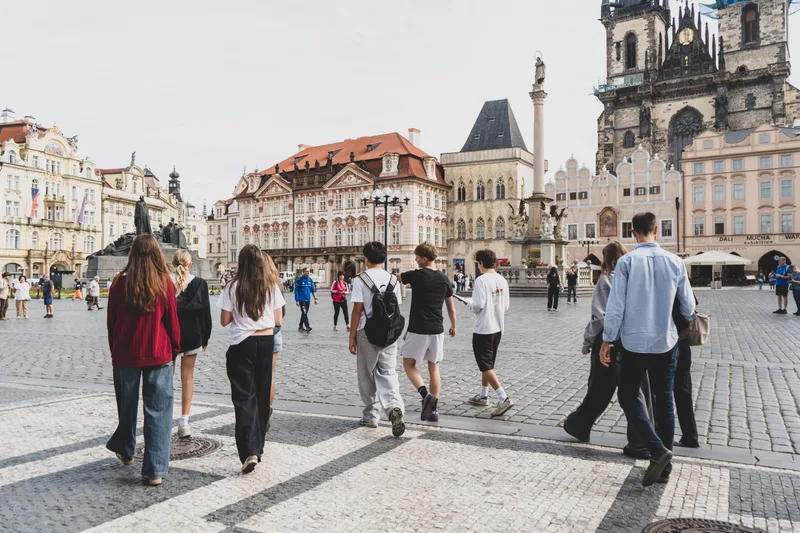
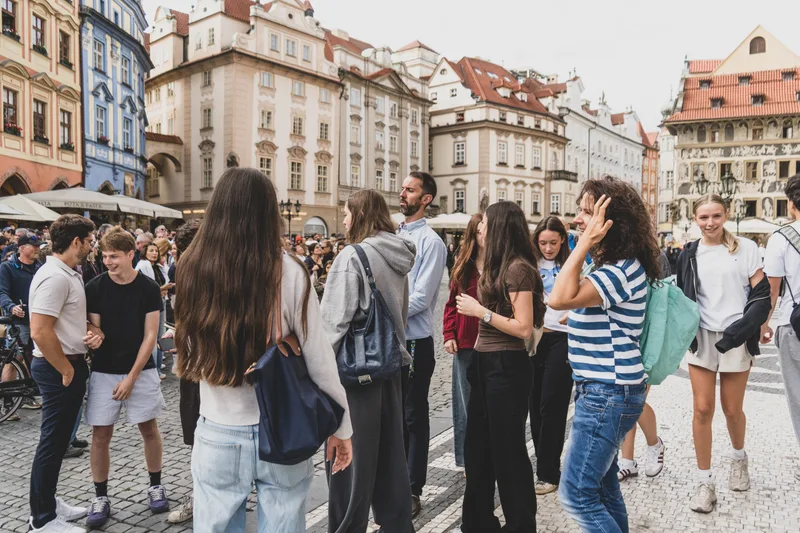
The route wound through both the best-known and lesser-visited corners of the historic centre — the Old Town Square, streets around the university buildings, statues and nooks students would otherwise have no reason to visit. At each checkpoint, groups solved orientation puzzles and group tasks, with bonus photo and video challenges added on top — material students later used in the afternoon advert.
Back for Lunch
Groups gradually returned to the Úvoz campus, where a hot lunch was waiting. While students ate, our instructors scored each group's results — who'd completed the most tasks, who'd been fastest, and whose bonus photos were the funniest.
Afternoon Advert-Making and Awards
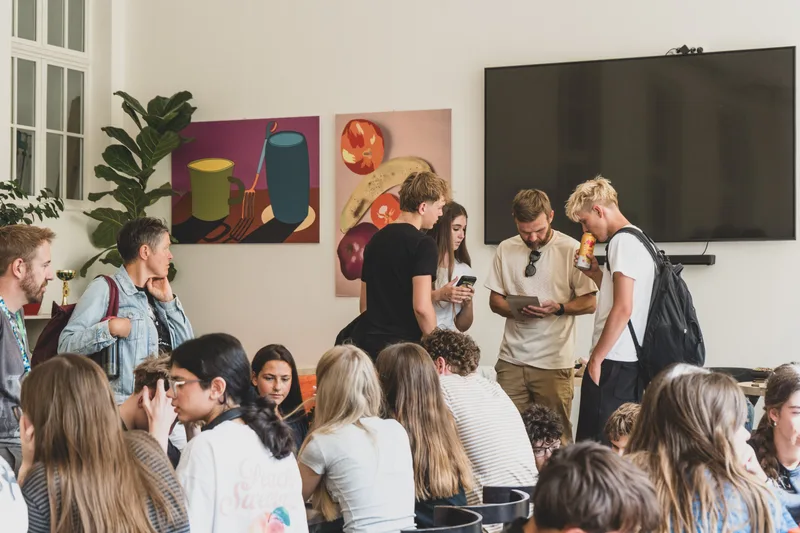
After lunch came the creative session — using the photos and videos collected during the morning hunt, students put together a short advert for Scavenger Hunt Prague. The day ended at 15:00 with the winning group announced right on the terraced garden of the Úvoz campus — exactly on the schedule the school had set at the very start.
Why It Worked — Lessons for Team Building at Schools
Safety, format flexibility and a clear structure to the day are what made this event a success, even after an unexpected rule change at the last minute.
From an organiser's perspective, this was an event we took several lessons from that apply to any team building for schools and student groups.
- Team building for schools plays by different rules than corporate events. Safety and supervision aren't a bonus — they're a baseline requirement you need to factor in from the very first conversation with a client, and be ready to adapt the programme to, even when the brief changes mid-planning.
- The Treasure Hunt format holds up under pressure. Even when the rules change a week before the event, the core of the experience — solving tasks, navigating the city, working as a team — can be preserved. You just need to adjust group size and the level of supervision, not the whole concept.
- A full-day programme works when the phases complement each other. A physical morning game and a calmer creative afternoon together hold students' attention for the whole school day without wearing them out.
- Smaller groups with clear supervision work better. For students who don't know each other well (two different year groups mixed together), a smaller team of ten with an adult chaperone helps — not just for safety, but for the dynamics of the group itself.
Team building is usually associated mainly with corporate events, but the same principles — cooperation, a shared experience, a common goal — work just as well for student groups, as long as the format is adapted to the age and conditions of the group.
Planning team building for a school or student group? See how the whole Treasure Hunt works step by step, or read how we approach events for large groups.